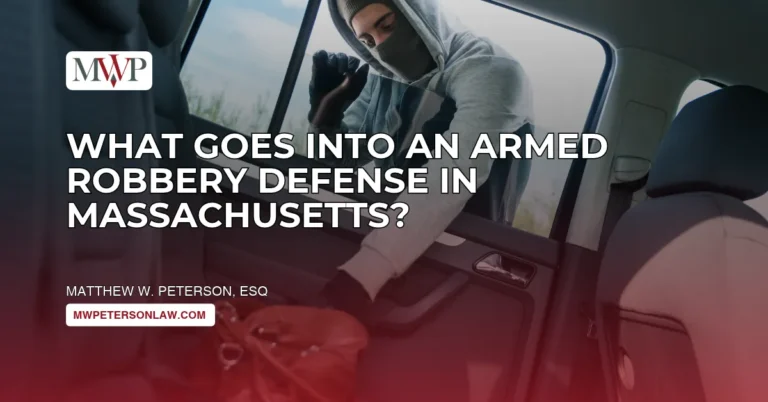

Breaking into a car in Massachusetts can absolutely be a felony, but it does not have to be. A car break-in usually is not a single charge. It is often two: breaking and entering the vehicle, and larceny of whatever was taken from inside. Whether you are looking at a felony depends on when the break-in happened, what the person intended to do, and how much the stolen property was worth. Stealing the car itself is a separate and more serious crime. Understanding which charge you actually face is the first step in defending it.
How Massachusetts Charges a Car Break-In
The first is breaking and entering a vehicle. This covers forcing your way into a car, but it also covers situations where someone opens an unlocked door with the intent to commit a crime inside. How serious this charge is turns on two things: whether it happened at night, and whether the person intended to commit a felony or only a misdemeanor once inside. A nighttime break-in with intent to commit a felony is a serious felony in its own right, carrying years of potential state prison time. A break-in tied only to a minor intended offense is punished far more lightly, sometimes with no more than a small fine or a few months.
The second part is the larceny of whatever was taken from the car. That follows the same rule as any theft: if the stolen property was worth more than $1,200, it is a felony; if it was worth $1,200 or less, it is a misdemeanor.
Breaking Into a Car vs. Stealing the Car
These are not the same offense, and the gap between them is large.
Breaking into a car to take items inside, like a phone, a laptop, or a wallet, is the break-in plus larceny situation described above.
Stealing the car itself is a different and tougher charge. Massachusetts treats motor vehicle theft seriously: taking a car, stripping it for parts, or even knowingly receiving or hiding a stolen vehicle can carry up to fifteen years in state prison, jail time, or a fine of up to $15,000. So the question of whether someone took property from a car or took the car itself dramatically changes the exposure.
Felony or Not? What Tips the Balance
Several factors can push a car break-in into felony territory:
- The break-in happened at night and was tied to an intended felony.
- The property taken from inside was worth more than $1,200.
- The car itself, or its parts, was stolen.
A daytime grab of a cheap item from an unlocked car sits at the lower end. A nighttime break-in to steal a $2,000 laptop can be a felony on more than one front at the same time. The facts decide it.
The Intent Requirement and the Evidence
Intent runs through these charges. For the theft, the prosecution must prove an intent to permanently deprive the owner of the property. For the break-in, it must prove the person intended to commit a crime inside the vehicle at the moment of entry. Where intent is thin, the case is vulnerable.
The evidence usually comes from cameras: parking lot surveillance, nearby doorbell footage, dash cameras. None of it is automatically admissible. It has to be authenticated, and identity is frequently the weak point, since footage that clearly shows a break-in may not clearly show who did it. Fingerprints, DNA, and recovered property can also be challenged on how they were collected and connected to the accused.
What to Do If You're Charged
Do not try to talk your way out of it with the police. Explanations given at the scene often become some of the prosecution’s strongest evidence. Many successful defenses in these cases come from outside a defendant’s statements, such as mistaken identity, a lack of proof of intent, disputes over the value of the property, or challenges to the legality of the stop or search.
Talk to a Lawyer
If you have been charged with breaking into a vehicle or stealing one anywhere in Eastern Massachusetts, an experienced Boston criminal defense attorney can evaluate the evidence, identify weaknesses in the prosecution’s case, and protect your rights from the outset.
The Law Office of Matthew W. Peterson offers free consultations for criminal charges. Call or text 617-295-7500, or send us a message below. We will explain exactly what you are charged with, where the case may be vulnerable, and the legal options available to you.