



Facing Criminal Charges in Cambridge, MA? A Cambridge Criminal Defense Attorney Is Ready to Protect Your Rights
Being charged with a crime in Cambridge, MA, can feel overwhelming and stressful. You may be worried about your future, your freedom, and your reputation. At the Law Office of Matthew W. Peterson, we understand the seriousness of these challenges. With offices in Boston and Salem, our top-rated criminal defense law firm in Massachusetts provides trusted and aggressive Cambridge criminal defense lawyers, including cases in Cambridge District Court and throughout Middlesex County.
We represent individuals facing a wide range of charges, including white-collar crime, drug crime, theft and property crime, assault and violent offenses, motor vehicle-related offenses, sexual offenses, firearms charges, and public order violations. Whether this is your first offense or you are dealing with more serious allegations, a Massachusetts defense attorney from our firm will help guide you through the legal process and build a strong defense strategy.

Why You Need a Cambridge Criminal Defense Lawyer
When you are charged with a crime in Massachusetts, the consequences can be severe. Convictions may lead to jail time, significant fines, probation, or the loss of important rights such as your ability to drive or possess a firearm. The stakes are high, which is why you need an aggressive criminal defense attorney who knows the local courts and laws. Our attorneys bring extensive courtroom experience and deep insight into the prosecution process to protect your rights in Cambridge District Court and beyond.
At the Law Office of Matthew W. Peterson, we take every case seriously. We believe each client deserves personalized attention and a strong legal defense. Our goal is to ensure that your side of the story is heard and that every possible defense option is explored. We are proud to be recognized as a trusted and top-rated criminal defense law firm in Massachusetts.
Criminal Defense Services in Cambridge
Cambridge’s mix of dense residential neighborhoods, two major universities, a booming biotech and tech sector in Kendall Square, and a busy nightlife strip along Massachusetts Avenue produces a wide range of criminal matters. Here’s how our office handles the categories we see most often in Cambridge.
Public order offenses
Public order offenses include charges like disturbing the peace, disorderly conduct, or resisting arrest. These are defined under various sections of the Massachusetts General Laws, including MGL c. 272. While they may appear minor, they can still lead to fines, probation, or a criminal record. Our law firm treats every charge seriously and fights to minimize the impact on your life.
Sexual offenses
Sexual offense allegations carry some of the harshest penalties under Massachusetts law (MGL c. 265). These charges can involve lifetime consequences, including sex offender registration. Even an accusation alone can damage your reputation and livelihood. Our Cambridge criminal defense attorneys provide aggressive criminal defense representation to ensure your rights are fully protected at every stage.
Assault and violent crime
Assault and violent crime cases, including assault and battery, are taken very seriously by Massachusetts courts. Under MGL c. 265, penalties can include imprisonment and long-term criminal records. These cases often rely on witness testimony and conflicting accounts. Our attorneys carefully investigate the facts, highlight inconsistencies, and pursue defenses that protect your rights.
Motor vehicle offenses
Motor vehicle offenses can range from operating under the influence (OUI) to reckless driving and operating with a suspended license. Massachusetts law (MGL c. 90) sets out the rules and penalties for these charges. Convictions may result in license suspension, hefty fines, or even jail time. Our law firm has extensive experience defending clients in the Cambridge District Court who face these charges.
White-collar crime
White-collar crimes often involve financial or business-related misconduct, such as fraud, embezzlement, or forgery. These offenses are covered under various sections of the Massachusetts General Laws (MGL c. 266), which address crimes against property. Even though they are non-violent, they can lead to serious penalties, including imprisonment and restitution. Our firm has the resources to analyze complex evidence and fight for the best possible outcome.
Firearms charges
Massachusetts has strict firearm laws under MGL c. 140. Charges such as unlawful possession, carrying without a license, or improper storage of firearms can bring severe penalties. A conviction may result in mandatory minimum sentences. Our Cambridge criminal defense attorneys know how to challenge evidence and protect your constitutional rights in these cases.
Theft and property crime
Theft and property crimes include larceny, shoplifting, burglary, and vandalism. Massachusetts law (MGL c. 266) defines these offenses and outlines penalties depending on the value of the property and the circumstances of the crime. A conviction can result in fines, probation, or jail time, along with a permanent record. Our Cambridge criminal defense attorneys use proven defense strategies to challenge the prosecution’s case and protect your future.
Drug crime
Drug crimes are prosecuted aggressively in Massachusetts. Laws such as MGL c. 94C governs controlled substances and outlines offenses like possession, distribution, and trafficking. Penalties vary depending on the type and amount of drug, as well as prior convictions. Our criminal defense attorneys are skilled in examining evidence, such as search and seizure procedures, to ensure your rights were not violated.
Cambridge Criminal Courts
Which court handles criminal cases in Cambridge? Adult criminal matters arising in Cambridge are heard at Cambridge District Court, which, despite its name, now sits in Medford, several miles from the city. Felony indictments and cases beyond District Court sentencing authority go to Middlesex Superior Court, which sits in Woburn or Lowell, and juvenile matters are heard at Cambridge Juvenile Court, which sits at its own address in Cambridge itself.
Cambridge District Court
Cambridge District Court is the primary trial court for adult criminal matters arising in Cambridge, Arlington, and Belmont. It now shares a building in Medford with Malden District Court, a detail that surprises people expecting a Cambridge address, and hears arraignments, bail hearings, Clerk-Magistrate show-cause hearings, pretrial hearings, and bench and jury-of-six trials.
- Address: 4040 Mystic Valley Parkway, Medford, MA 02155
- Phone (Clerk’s Office): (781) 306-2715
- Phone (Probation): (781) 306-2750
- Hours: Monday–Friday, 8:30 a.m.–4:30 p.m.
- Parking: Free parking at the courthouse
- Public transit: MBTA Orange Line, Wellington Station; bus routes 90, 97, 99, 100, 106, 108, 110, 112, 134

Middlesex Superior Court
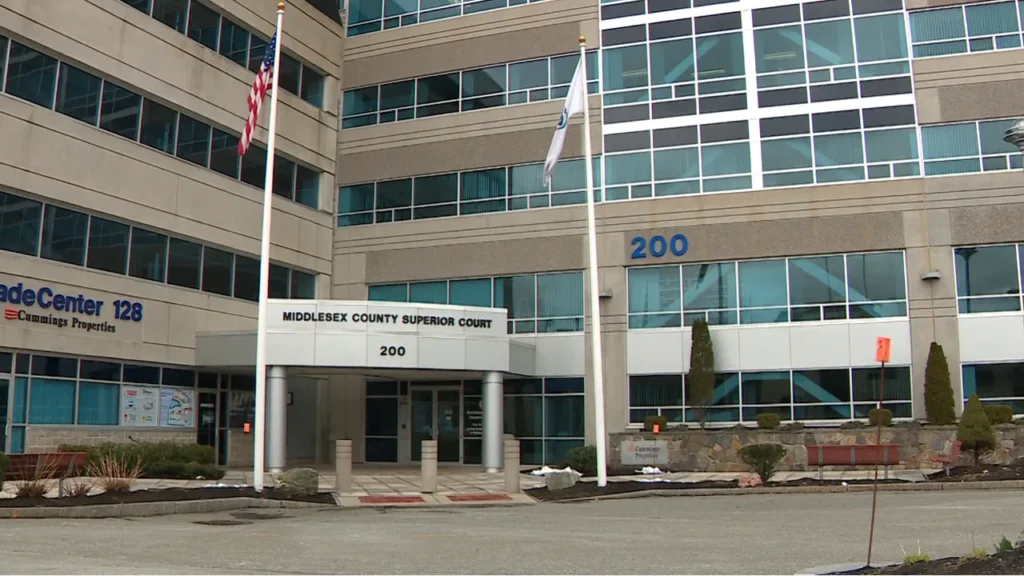
A Cambridge felony that proceeds by grand jury indictment, or that carries sentencing exposure beyond what District Court can impose, moves to Middlesex Superior Court, which sits in two locations: Woburn and Lowell.
- Middlesex Superior Court (Woburn): 200 Tradecenter Drive, 2nd Floor, Woburn, MA 01801, Phone (Clerk’s Office): (781) 939-2700
- Middlesex Superior Court – Lowell: 370 Jackson St., Lowell, MA 01852, Phone (Clerk’s Office): (978) 656-7800
Both sessions run Monday through Friday, 8:30 a.m. to 4:30 p.m. The Woburn courthouse has free on-site parking, and the Lowell session shares the parking and public transit access of Lowell District Court.

Cambridge Juvenile Court
Unlike Cambridge District Court, Cambridge Juvenile Court sits inside the city it’s named for, several miles from the Medford courthouse. It hears delinquency cases and Child Requiring Assistance petitions for Cambridge and several neighboring communities.
- Address: 121 Third St., Cambridge, MA 02141
- Phone (Clerk’s Office): (617) 494-4100
- Towns served (full jurisdiction): Arlington, Belmont, Cambridge, Everett, Malden, Medford, Melrose, Somerville, Wakefield
Towns served (care and protection only): Bedford, Lexington, Newton, Waltham, Watertown, Weston - Hours: Monday–Friday, 8:30 a.m.–4:30 p.m.
Appeals Court and Supreme Judicial Court
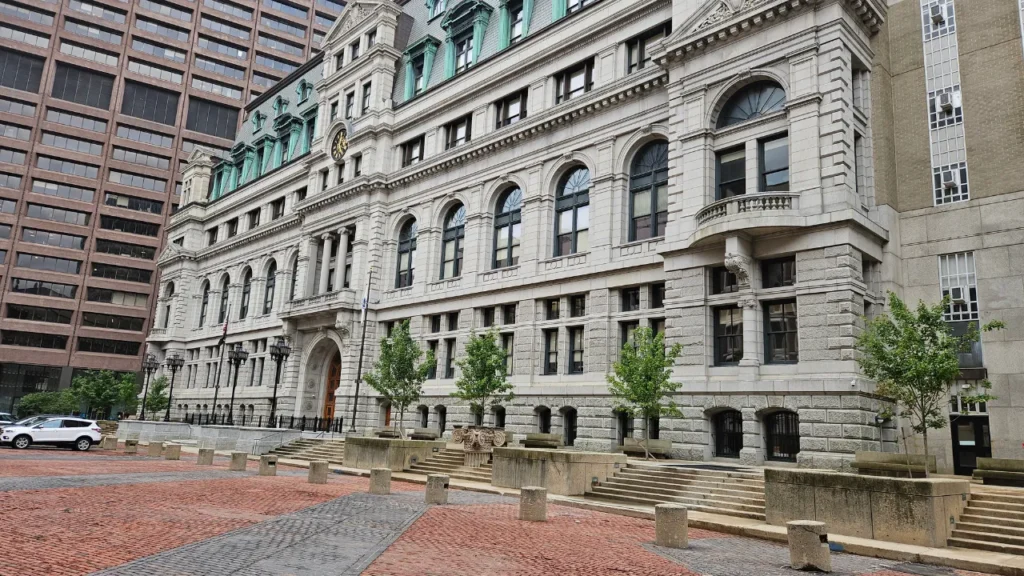
An appeal from a Cambridge conviction generally goes to the Massachusetts Appeals Court, and in narrower circumstances, the Supreme Judicial Court, both housed at the John Adams Courthouse in Boston. Appellate review runs on its own timeline and generally focuses on a narrow set of preserved legal issues rather than a fresh look at the facts.
If Cambridge Police Were Involved
The Cambridge Police Department, headquartered at 125 Sixth Street, Cambridge, MA 02142 (non-emergency line: 617-349-3300), is usually the source of the arrest report, citation, or bail paperwork behind a Cambridge case, and a good starting point for retrieving copies of that paperwork. Depending on where and how an incident happened, MIT Police, Harvard University Police, or MBTA Transit Police may also have been involved, particularly for anything that occurred on or near a campus or a T station.
Court hours, parking, and phone numbers change from time to time, so confirm any of the above against the court itself or Mass.gov before relying on it for an actual court date.
How a Cambridge Criminal Case Actually Moves Through Court
If you have a criminal case in Cambridge, the steps ahead depend on the charge, the court, and the circumstances of the case. A shoplifting complaint and a felony indictment, for example, can follow very different paths. Still, most Massachusetts criminal cases move through some version of the following checkpoints, generally in this order:
- Someone starts looking. Long before an arrest, Cambridge Police, a state trooper, or, for anything campus-adjacent, a university’s own investigators may already be pulling together statements, footage, or records, often without the person under scrutiny knowing about it yet.
- A complaint gets filed, or an arrest happens. Massachusetts cases begin one of two ways: police make an arrest on the spot, or a complaint application is submitted later with nobody ever taken into custody.
- A clerk-magistrate weighs in first, if there was no arrest. This show-cause hearing exists specifically to test whether probable cause actually supports a complaint, and it’s frequently the single best opportunity to keep a case from ever becoming a record.
- Arraignment. Formal charges go on the record, a not-guilty plea is entered as a matter of course, and the judge sets whatever bail or release conditions apply.
- Conditions attach. Depending on the allegation, release might come with a stay-away order, a requirement to surrender a firearms license, or drug or alcohol testing.
- The Commonwealth hands over its evidence. Discovery means police reports, statements, body-camera footage, and forensic results all become available for the defense to pick apart.
- The defense pushes back. Motions to suppress unlawfully obtained evidence, motions to dismiss, and motions to compel additional discovery all get filed at this stage, once the evidence has actually been reviewed.
- Negotiation is an option, not an obligation. Prosecutors and the defense may discuss a resolution short of trial, but the client alone decides whether to accept any offer.
- Trial, if the case gets there. A bench or jury trial follows for anything unresolved, with the Commonwealth on the hook to prove every element beyond a reasonable doubt.
- Sentencing. Where a conviction or admission results, the sentence reflects the specific charge, the person’s history, and whatever else the court considers relevant.
- Appeal. A narrow right of appeal generally runs to the Massachusetts Appeals Court, and less often the Supreme Judicial Court, limited to legal issues preserved earlier in the case.
Plenty of Cambridge cases skip several of these steps entirely; how far a case goes, and how fast, depends on the charge and which court ends up hearing it.
Facing Criminal Charges in Cambridge Right Now? Do These Things
A pending case is a waiting game, and a few habits go a long way toward not making things worse while you’re in it:
- Let your attorney do the talking. Police, the complaining witness, well-meaning friends, none of them should be hearing your side of the story before your lawyer does.
- Assume Instagram, texts, and group chats are discoverable. A “private” post about the incident has a way of surfacing in a prosecutor’s file.
- Keep everything; don’t clean anything up.
- Screenshots, photos, receipts, messages: hang onto all of it rather than deciding on your own what’s irrelevant.
- Stick to your release conditions exactly as written, even the ones that feel excessive, until a judge actually changes them.
- Show up to everything. Skipping a hearing because the allegation seems weak almost always backfires.
- Double-check the courthouse, not just the date. Cambridge District Court sits in Medford, not Cambridge, and Cambridge Juvenile Court is a different building entirely; confusing the two is an easy, avoidable mistake.
- Loop in a lawyer before your first hearing, not after a Clerk-Magistrate hearing has already gone sideways.
- Keep the details close. The fewer people who know exactly what happened, the fewer complications down the road.
None of this substitutes for advice about your specific case; the charges you’re facing and the court hearing them will determine what actually matters most.
Documents Worth Bringing to Your First Meeting
- Paperwork tells an attorney far more than a recap of what you remember. Round up whatever you can find from this list before your first meeting:
- Whatever charging document you received: complaint, summons, or indictment
- Paperwork from booking, if you were arrested and processed
- The written terms of your bail or release conditions
- Anything naming your next court date, including which courthouse it’s at
- The police report, if Cambridge Police, MIT Police, Harvard Police, or another department has already given you one
- A search warrant, if one was used in your case
- Any citation issued at the scene
- Paperwork from an earlier or related court matter
- Texts, emails, or DMs connected to what happened
- Photos or video, from your phone or anyone else’s
- Current probation terms or any standing court order
If something on this list doesn’t apply, or you simply don’t have it yet, that’s fine; bring what you’ve got, and your attorney can help chase down the rest.
Contact a Cambridge Criminal Defense attorney Today
If you are facing criminal charges in Cambridge, MA or in Cambridge District Court, do not wait to take action. Having a defense attorney involved early can help protect your rights and create opportunities for a stronger case strategy. Our top-rated criminal defense law firm in Massachusetts is committed to providing aggressive representation tailored to your situation. With experience in Cambridge District Court and throughout Middlesex County, we know how to defend against a wide range of charges. Contact us now to set up a strategy session and take the first step in protecting your future.


