Automatic Disqualification After Mental Health or Substance Commitments
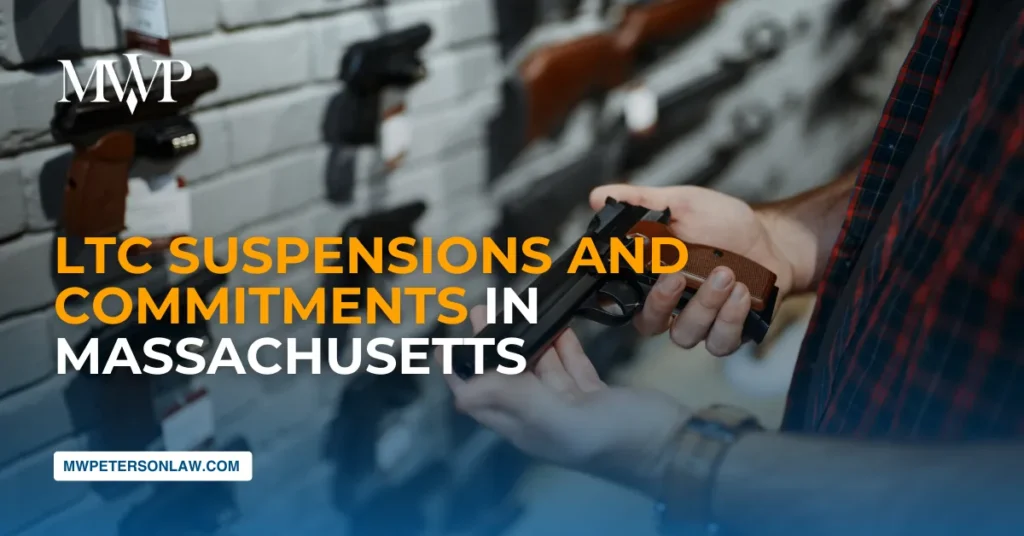
LTC suspension issues often arise when a person becomes legally ineligible to hold a License to Carry. Under Massachusetts law, certain mental health or substance use commitments automatically disqualify a person from obtaining or holding a License to Carry (LTC).
An individual is a “prohibited person” ineligible for an LTC if they “is or has been…committed to a hospital or institution for mental illness, alcohol or substance abuse,” with some exceptions (M.G.L. c. 140, §131(d)(iii)(A)).
This includes anyone committed by a court order for mental health treatment (such as a civil commitment under M.G.L. c. 123, §§7 and 8) or someone found to have a substance use disorder and involuntarily committed for substance abuse treatment under M.G.L. c. 123, §35. If a Massachusetts court has ordered your commitment, you generally cannot get or keep an LTC.
These disqualifications apply regardless of how long ago the commitment occurred unless you pursue the legal remedies described below. Your LTC must be suspended or revoked if the licensing authority becomes aware of a disqualifying event (M.G.L. c. 140, §131(f)). Once suspended or revoked, you may not possess firearms under Massachusetts law.
Section 12 Hospitalizations and Discretionary Suspensions
A “Section 12” hospitalization refers to emergency psychiatric evaluation and short-term hold under M.G.L. c. 123, §12. These short-term hospitalizations do not constitute court-ordered commitments and do not automatically disqualify someone from an LTC. However, they may still lead to a suspension based on the police chief’s determination of “unsuitability” under M.G.L. c. 140, §131(f).
The licensing authority has discretion to suspend or revoke a license if the individual has exhibited behavior that creates a risk to public safety. This decision can be reviewed in District Court, where the license holder bears the burden of showing that the suspension lacked reasonable grounds or was arbitrary or capricious.
Massachusetts courts defer heavily to the licensing authority’s judgment, and successful appeals often require strong evidence showing that the suspension is no longer justified.
Medical Affidavit Exception After Five Years
For those committed for mental health reasons, Massachusetts law provides a limited path to relief after five years. Under M.G.L. c. 140, §131(d)(iii)(A), individuals may submit an affidavit from a licensed physician or psychologist stating they are no longer disabled by a mental illness that would prevent them from safely possessing a firearm. This affidavit must be submitted along with a new LTC application.
This exception is not available to those committed under Section 35 for substance use. Those individuals must instead follow the court petition process described below.
Petitioning the Court for Relief After Commitment
After five years from the date of a qualifying commitment, individuals may petition the committing court to remove the firearms disqualification (M.G.L. c. 123, §35 and §36C). The court may grant relief only if it finds both that the individual is not likely to act in a manner dangerous to public safety and that restoring rights is not contrary to the public interest.
The petitioner may present medical evidence from a physician or psychologist showing the condition has resolved or has been successfully treated for at least three consecutive years. If the court grants relief, the decision is forwarded to the state and national background check systems. If denied, the petitioner may appeal to the Appellate Division of the District Court, which conducts a de novo review.
Appealing Unsuitability-Based Suspensions
Suspensions based on suitability (rather than statutory disqualification) can be appealed to the District Court under M.G.L. c. 140, §131(f). The standard of review is deferential to the police chief; the court may reverse the decision only if it lacked reasonable grounds or was arbitrary and capricious.
License holders should prepare evidence such as medical evaluations, character references, and documentation of treatment compliance. While not easy to win, some suspensions have been overturned when the court finds no ongoing safety concern or finds that the police chief acted without sufficient justification.
Summary: What You Can Do
If your LTC has been suspended or revoked due to a civil commitment:
- Know whether it was a court-ordered commitment (which triggers automatic disqualification) or a temporary hospitalization (which may lead to discretionary suspension).
- If disqualified, begin preparing for relief by remaining in treatment, obtaining evaluations, and observing the five-year waiting period.
- If eligible, obtain a physician or psychologist affidavit after five years for mental health-related disqualifications.
- If suspended due to suitability concerns, consider filing an appeal to District Court within the 90-day deadline, with strong supporting documentation.
Understanding the type of suspension and the available remedies is key to restoring your rights under Massachusetts law. With time, documentation, and in some cases, court approval, it is possible to regain eligibility for an LTC. The right firearms lawyer can advise you on all these points, and even represent you before the court if necessary.