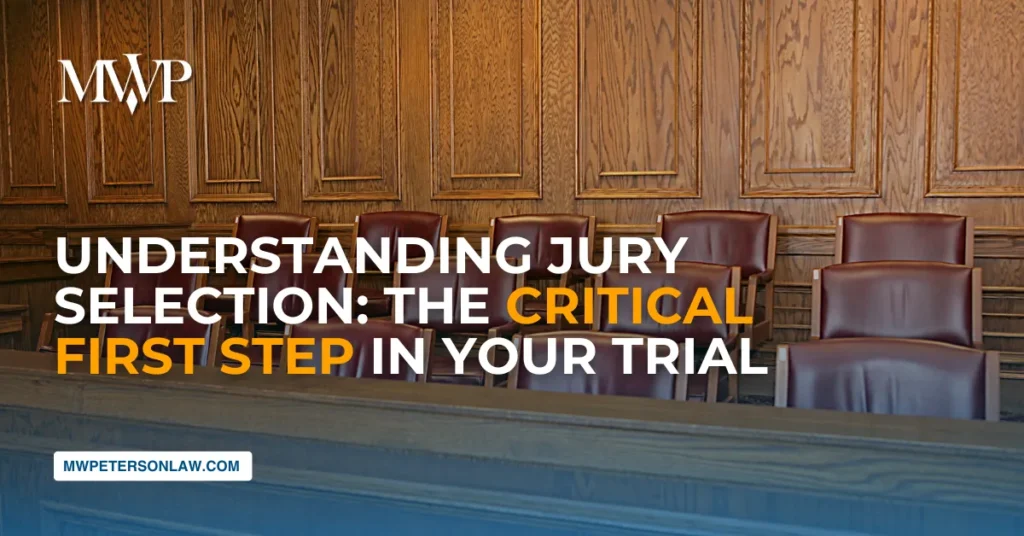
When you decide to take your criminal case to trial, the first crucial step happens before the trial technically begins: jury selection. This process, sometimes called voir dire, determines which of your fellow citizens will ultimately decide the verdict. Understanding how jury selection works can help you appreciate the value of experienced legal representation.
The Start of the Process
Jury selection actually starts when potential jurors receive questionnaires asking about their backgrounds, including their interactions with law enforcement, occupation, education level, and other biographical information. This preliminary screening is provided to attorneys on the day of trial and gives a first glimpse into who these potential jurors are.
However, there’s an important caveat: nothing compels people to complete these questionnaires thoroughly. Some potential jurors provide detailed, thoughtful responses that give attorneys valuable insights into their perspectives and potential biases. Others provide minimal information, leaving attorneys to work with limited knowledge about these individuals who could determine the outcome of the case.
The Reality of Massachusetts District Court Practice
While legal experts generally agree that individual conversations with potential jurors provide the best way to assess how they might behave during deliberations, the reality in Massachusetts district courts often falls short of this ideal. Rather than robust individual questioning, judges typically ask a standard list of questions, and jurors simply indicate yes or no responses.
For example, the judge might ask: “Do you tend to believe law enforcement more or less than anyone else because they are law enforcement?” Those who answer yes will be noted and called to the sidebar for further questioning away from the other potential jurors.
Customizing Questions for Complex Cases
In cases involving sensitive subject matter, such as those involving harm to children or other particularly difficult topics, attorneys can request that judges include special questions in the jury selection process. These tailored questions help identify potential jurors who might bring biases that would interfere with their ability to be fair and impartial, which is every juror’s fundamental obligation.
The Sidebar Process
When potential jurors indicate they may have biases, they’re called to a sidebar where they speak quietly with the judge and attorneys from both sides. The defendant is typically invited to participate in this process as well. During these hushed conversations, the judge investigates the juror’s responses: Why did they answer this way? What makes them think they might be too biased to serve?
This sidebar process gives experienced attorneys a crucial opportunity to probe for any fatal biases a potential juror might hold against someone in their client’s position.
Challenges: For Cause and Peremptory
When attorneys discover problematic biases during questioning, they can exercise a “challenge for cause,” asking the judge to remove that person from the jury pool because they cannot be unbiased. Judges typically grant these challenges when the bias is clear and the argument is reasonable. Sometimes, the issue will be so obvious that the judge will excuse the juror without input from the attorneys.
If a for-cause challenge fails, attorneys still have peremptory challenges at their disposal. These allow attorneys to strike potential jurors for any reason without explanation—though there are important legal limitations involving racial discrimination that require careful navigation by experienced counsel.
Each side receives only a limited number of peremptory challenges, making their strategic use crucial to building a fair jury.
More Art Than Science
Jury selection remains one of the most challenging and underappreciated aspects of trial litigation. Getting a qualified and unbiased jury involves more art than science, and it’s an area where many attorneys lack adequate training or understanding. Superficially, someone might seem like a “good” juror for your specific case, but probative questioning can show that they harbor views that could swing the jury in the wrong direction.
One classic example is a juror with a drunk driving conviction; are they the perfect juror for a drunk driving trial? That depends on whether they feel like they were trapped by police and railroaded by the justice system, or if they view their conviction as a valuable turning point that helped them finally get clean.
The stakes couldn’t be higher. The people selected during this process will listen to all the evidence in your case and decide whether you’re guilty beyond a reasonable doubt. Their backgrounds, biases, and perspectives will shape how they interpret testimony, evaluate evidence, and ultimately reach their verdict.
Having a qualified defense attorney who understands the nuances of jury selection—who knows what questions to ask, when to raise challenges, and how to read between the lines of juror responses—can literally make the difference between conviction and acquittal. In a system where your freedom hangs in the balance, this critical first step deserves the attention and expertise it requires.