When your child faces a school disciplinary hearing in Massachusetts, the stakes can be higher than many parents realize. Massachusetts school disciplinary hearings can impact not only your child’s education but also their future opportunities. Understanding the process and knowing when to seek legal representation can make all the difference.
What Is a School Disciplinary Hearings?
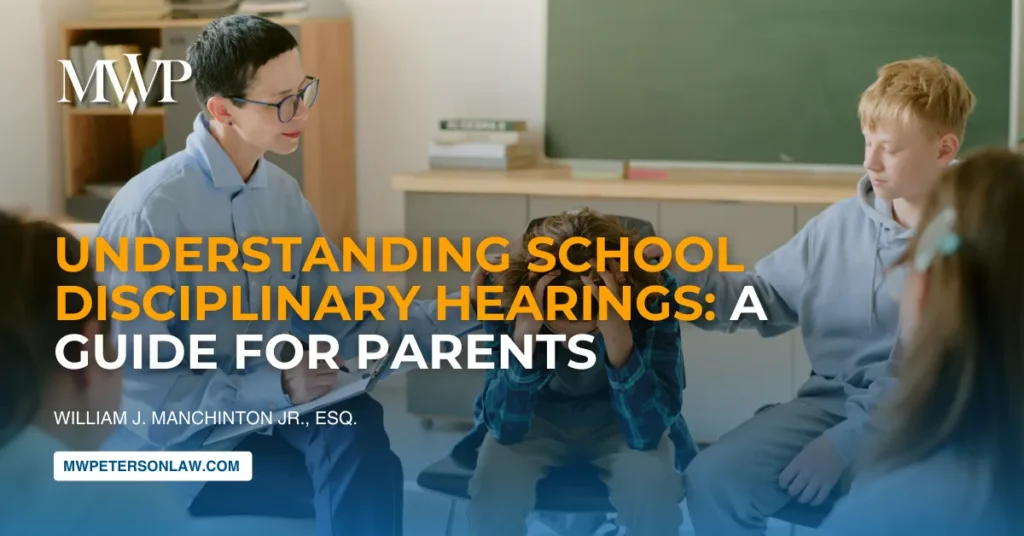
A school disciplinary hearing is a formal proceeding conducted by a school or school district to address alleged violations of school rules or codes of conduct. These hearings typically occur when a student faces serious disciplinary consequences such as long‑term suspension exceeding ten days, expulsion, removal to an alternative education setting, or exclusion from extracurricular activities or graduation ceremonies.
According to the U.S. Supreme Court in Goss v. Lopez, students are entitled to due process protections—such as notice and an opportunity to be heard—before being suspended or expelled, with formal proceedings required for significant disciplinary actions. While schools handle minor infractions through informal means, more serious allegations trigger due process protections that require a formal hearing before significant disciplinary action can be taken..
It’s important to understand that the procedures governing these hearings vary dramatically depending on whether your child attends a public elementary or secondary school, a private school, or a university. Public K-12 schools in Massachusetts must follow both state regulations and their own district policies, which provide specific due process protections. Private schools, however, operate under their own codes of conduct and may have far less formal procedures since they aren’t bound by the same constitutional requirements.
Universities and colleges represent yet another category entirely, with their own disciplinary systems that can range from relatively informal administrative reviews to quasi-judicial proceedings with multiple levels of appeal. College disciplinary hearings often involve different standards of proof, more complex procedural rules, and may implicate Title IX regulations in cases involving sexual misconduct. The consequences at the university level can include not just suspension or expulsion, but also notations on transcripts that can devastate graduate school prospects and professional opportunities.
The Disciplinary Hearing Process
The procedural steps in a disciplinary hearing can vary significantly, but understanding the general framework helps you prepare effectively. The school must provide written notice of the alleged misconduct, including specific details about what your child allegedly did, when it occurred, and what rules were violated. This notice should also inform you of the date, time, and location of the hearing, though the amount of advance notice can differ substantially between a public school district hearing and a university honor board proceeding.
You typically have several days between receiving notice and the hearing date, and this time is crucial for gathering evidence, identifying witnesses, and preparing your child’s defense. Some institutions provide only minimal time to prepare, while others may give weeks, depending on their policies and the severity of the allegations.
During the hearing itself, school administrators, a hearing officer, or in some cases a panel of faculty or students will review evidence, hear testimony from witnesses, and allow your child and their representative to present their side of the story. The proceeding may feel quite formal, with opening statements, witness examination, and closing arguments, or it might be a more conversational administrative review. After the hearing, the decision-maker will determine whether the alleged violation occurred and what disciplinary action is appropriate. You should receive this decision in writing, and most institutions provide some form of appeal process if you disagree with the outcome.
Why These Hearings Matter: The Real Consequences
Many parents underestimate the long-term implications of school disciplinary proceedings. The consequences extend far beyond missing a few days of school. Extended suspensions or expulsion disrupt your child’s education, potentially causing them to fall behind in coursework, miss important exams, or lose credit for entire courses. For high school students, this can jeopardize graduation timelines. At the college level, suspension often means losing an entire semester of credits and may trigger financial aid complications or housing issues.
Disciplinary actions often become part of your child’s permanent educational record. Some colleges and universities ask about disciplinary history on applications, and serious infractions can affect admission decisions. For college students, a disciplinary notation on a transcript can be even more damaging than a poor grade, raising red flags for graduate schools and professional programs that conduct thorough background reviews.
Many incidents that trigger school discipline also involve law enforcement. What begins as a school matter can quickly become a criminal case, with potential charges, arraignment, and court proceedings running parallel to the school process. For families with non-citizen students, certain disciplinary outcomes, particularly those involving criminal charges, can have immigration implications that affect future status adjustments or citizenship applications.
The emotional toll cannot be overlooked either. The stigma of discipline, separation from peers, and stress of the process itself can impact your child’s mental health and social development. Beyond the immediate academic consequences, disciplinary records can affect scholarship eligibility, military service opportunities, professional licensing, and even employment prospects in fields that conduct background checks or require disclosure of disciplinary history.
Why Legal Representation Makes a Difference
You might wonder whether hiring an MA attorney for a school hearing is necessary. While not legally required, having experienced legal representation provides significant advantages that can fundamentally change the outcome of your case.
School discipline law is complex, involving federal protections, state regulations, and district or institutional policies that even administrators sometimes misunderstand or misapply. An attorney ensures your child’s due process rights are protected throughout the proceedings and that the school follows proper procedures. We’ve seen cases where schools violated their own policies or failed to provide required accommodations, and without someone who knows what to look for, these violations go unchallenged.
Lawyers know how to investigate the allegations thoroughly, identify weaknesses in the school’s case, gather exculpatory evidence, and prepare compelling witness testimony. We understand what evidence will be most persuasive in this particular forum and how to present it effectively. This isn’t a court of law, but it’s also not a casual conversation. The skills required to navigate these hearings effectively are specialized.
When school discipline intersects with criminal charges, coordinating both processes requires careful strategy. A Boston attorney can ensure that statements made in one proceeding don’t inadvertently harm your child’s position in the other. We’ve represented clients where protecting their Fifth Amendment rights in the school proceeding was critical to their criminal defense, something most parents wouldn’t realize until it’s too late.
Incomplete Investigations Challenged
Schools sometimes rely on incomplete investigations, hearsay, or unreliable witness statements. An attorney can challenge the admissibility and credibility of evidence, ensuring decisions are based on solid facts rather than assumptions or institutional pressure to take action. In many cases, an experienced Boston criminal attorney can negotiate alternative resolutions that avoid the harshest consequences, working with administrators to find solutions like reduced disciplinary sanctions, alternative education plans, or restorative justice approaches that keep your child in school while still addressing the school’s concerns.
Students with disabilities have additional protections under federal law, specifically IDEA and Section 504. An attorney ensures these safeguards are honored and that schools consider whether behavior was a manifestation of a disability before imposing discipline. These manifestation determination reviews are complex proceedings within proceedings, and mistakes here can violate federal law.
If the hearing results in an adverse decision, an attorney can identify grounds for appeal and effectively advocate at the next level of review. We understand how today’s hearing decision affects tomorrow’s opportunities and work not just to win the immediate hearing but to minimize lasting impacts on your child’s future.
When to Seek Legal Help
Consider consulting with an attorney as soon as you receive notice of a hearing, particularly if your child faces long-term suspension or expulsion, the allegations involve criminal conduct or police involvement, your child has special education protections, you’re concerned about immigration implications, the school’s investigation appears incomplete or biased, your child maintains their innocence, or previous informal attempts to resolve the matter have failed. Early involvement allows your attorney to shape the case from the beginning rather than trying to correct problems after they’ve already damaged your child’s position.
The procedural differences between elementary schools, high schools, and universities mean that experience with the specific type of institution matters. A hearing at a state university operates under different rules than one at a public high school, and both differ significantly from private institution proceedings. Understanding these nuances and knowing how to navigate the specific system your child faces can be the difference between a successful defense and a devastating outcome.
What to Expect When Working with Our Firm
When you contact us about a school disciplinary matter, the Law Office of Matthew W. Peterson begins with a thorough consultation to understand the allegations, review all documentation, and assess your child’s situation. We explain your options clearly and develop a defense strategy tailored to your specific circumstances.
We handle all communication with school officials, conduct our own investigation, prepare your child to testify effectively, and advocate forcefully at the hearing. Our goal is not just to achieve the best possible outcome in the immediate proceeding but to protect your child’s long-term educational and life opportunities.
We also recognize that these situations are stressful for the entire family. Throughout the process, we provide clear communication, realistic expectations, and compassionate support. You can check our victory cases here.
Taking Action
If your child is facing a school disciplinary hearing in Massachusetts, time is critical. The earlier we get involved, the more options we have to build a strong defense and protect your child’s rights. Don’t let a school disciplinary matter derail your child’s future. Contact our office today to schedule a consultation and learn how we can help navigate this challenging process.
The information in this blog post is for general educational purposes only and does not constitute legal advice. Every case is unique, and outcomes depend on specific facts and circumstances. For advice about your particular situation, please contact our office for a consultation.