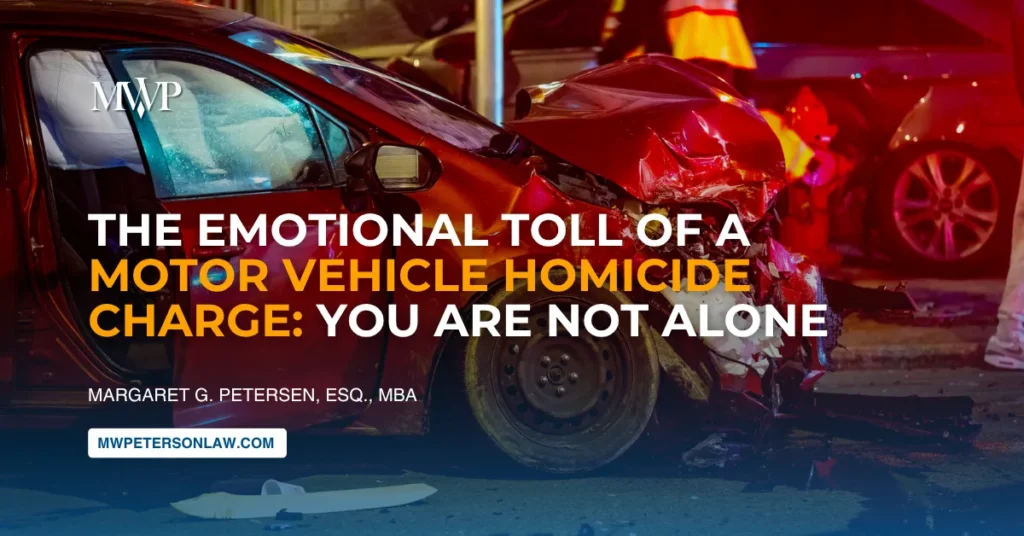
The emotional toll of a motor vehicle homicide charge can be overwhelming. Many people experience intense grief, guilt, anxiety, depression, fear about the future, and the stress of facing both a criminal prosecution and the aftermath of a fatal accident. While the legal consequences are significant, the emotional impact often begins long before the first court appearance and can affect every aspect of a person’s life.
Most information online about motor vehicle homicide focuses on legal issues such as charges, defenses, sentencing, and evidence. Those topics are important, but they rarely address the human side of the case. If you are facing a motor vehicle homicide charge—or supporting a family member or friend who is—this guide explains the emotional toll of a motor vehicle homicide charge, why these feelings are common, how the criminal process can affect mental health, and practical steps for coping while protecting your legal rights throughout the case.
What Is The Emotional Toll of People After a Fatal Car Accident?
Being involved in a crash where someone died is a traumatic event, regardless of how the law ultimately resolves the question of responsibility. People in this situation often experience guilt, grief, and shock simultaneously. Many describe feeling responsible for something they never intended, and that weight can be crushing.
Is PTSD common after a fatal car accident?
Clinical PTSD is common among people involved in serious accidents, including those who were driving. Symptoms can include intrusive memories of the crash, nightmares, hypervigilance, emotional numbness, and difficulty being in or near vehicles.
Can a fatal accident cause depression or suicidal thoughts?
Depression frequently follows, and for some people, the combination of grief over the accident and fear about the legal proceedings can bring on thoughts of suicide.
These are not signs of weakness. They are recognizable, well-documented responses to trauma. And they deserve to be treated as such.
How Does The Criminal Justice Process Make The Trauma Worse?
What makes the emotional landscape of an MVH case so difficult is that the normal process of grieving and recovering from trauma does not get to happen in peace. Instead, it happens alongside police interviews, court dates, attorney meetings, media attention in some cases, and the constant uncertainty of not knowing what the outcome will be.
Why do motor vehicle homicide defendants feel so isolated?
People in this situation often feel isolated. They may believe no one can understand what they are going through, that they are not entitled to their own pain because someone else suffered more, or that seeking help will somehow make them look guilty. None of these things are true, but they feel true, and that matters.
Will getting therapy make you look guilty in court?
Many defendants worry that seeing a therapist will be used against them. In reality, seeking mental health support after a traumatic accident and a criminal charge is not a sign of guilt. It is a sign of humanity.
Why is Getting Mental Health Help Important During a Motor Vehicle Homicide Case?
Addressing your emotional health is not separate from your legal situation — it supports it. Taking care of yourself now can make a meaningful difference in how you move through the case and how the court sees you.
How can therapy actually help your legal defense?
Practically speaking, proactive mental health treatment can support your legal case. Attorneys and judges understand that defendants who engage in therapy, demonstrate genuine remorse, and take active steps toward rehabilitation are different from those who do not.
At sentencing, documented mental health treatment shows the court that you have taken the experience seriously and are working through it responsibly. A therapist’s notes and testimony can humanize you in ways that legal arguments alone cannot.
What therapies work best for accident-related trauma?
Therapeutic approaches that have strong evidence for trauma include Cognitive Behavioral Therapy, or CBT, which helps people identify and work through distorted thought patterns that often accompany guilt and grief.
EMDR, Eye Movement Desensitization and Reprocessing, is specifically designed to process traumatic memories and has been extensively researched for accident-related PTSD. Both are available through licensed therapists in Massachusetts.
How Can Family and Friends Support Someone Charged with Motor Vehicle Homicide?
If your family member or friend is facing this charge, their emotional state is likely fragile in ways they may not be showing you. The instinct to focus entirely on the legal situation is understandable, but checking in on their mental health, encouraging them to speak with a therapist, and simply being present without judgment can make a real difference.
What is secondary trauma and can supporters experience it too?
You may be carrying your own secondary trauma from watching someone you love go through this. That is valid too. Your own support needs matter.
What Should You Do If You Are Having Suicidal Thoughts After a Fatal Accident?
If you or someone you know is having thoughts of suicide or self-harm, please reach out now. The 988 Suicide and Crisis Lifeline is available 24 hours a day, seven days a week. You can call or text 988 to be connected with a trained crisis counselor.
You do not have to be in immediate danger to call. You can call because things feel impossible. That is exactly what it is there for.
Should You Speak With a Massachusetts Motor Vehicle Homicide Attorney?
You are facing something serious. You do not have to face it alone — and you do not have to choose between protecting your mental health and protecting your legal rights. An experienced Boston criminal defense attorney who understands motor vehicle homicide cases can help you navigate the court process while respecting what you are going through emotionally.
If you or a family member is facing a motor vehicle homicide charge in Massachusetts, the Law Office of Matthew W. Peterson offers free consultations. We will listen, explain your options, and help you understand what comes next. Call or text 617-295-7500, or send us a message below.