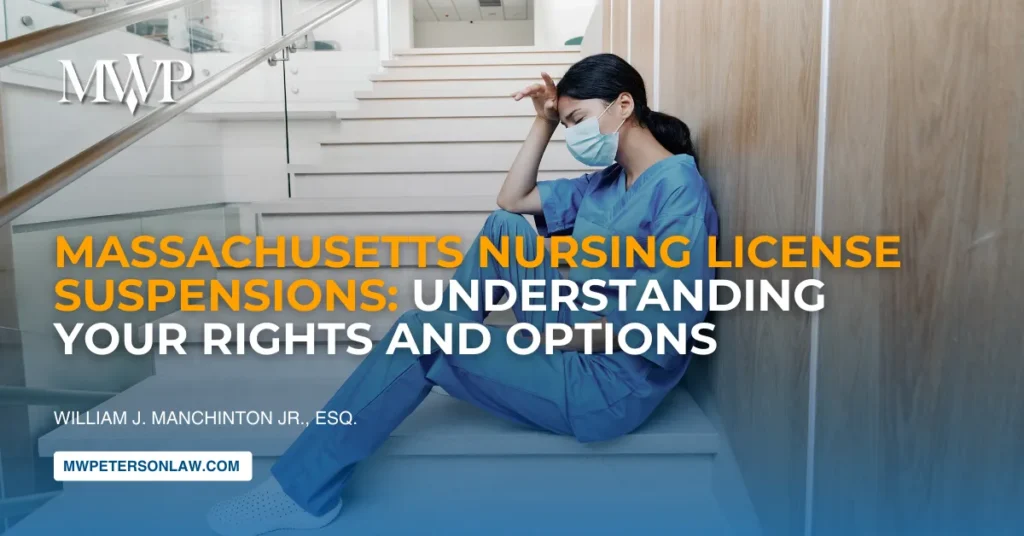
For nurses in Massachusetts, a professional license represents years of education, clinical training, and dedication to patient care. When that license comes under scrutiny by the Board of Registration in Nursing, including situations that may lead to Massachusetts nursing license suspensions, the consequences can be career-ending. Understanding how the disciplinary process works and why legal representation matters can be the difference between protecting your livelihood and losing everything you’ve worked to build.
The Massachusetts Board of Registration in Nursing
The Massachusetts Board of Registration in Nursing operates under the Bureau of Health Professions Licensure within the Department of Public Health and has broad authority to investigate complaints, conduct disciplinary proceedings, and impose sanctions against nurses who allegedly violate state laws or regulations governing nursing practice. The Board exists to protect the public by ensuring that licensed nurses meet professional standards and practice safely, but its proceedings can be complex, lengthy, and intimidating for nurses who find themselves facing allegations.
The Board receives complaints from various sources including employers, patients, family members, other healthcare professionals, and law enforcement agencies. Some investigations begin after criminal arrests or convictions, while others stem from workplace incidents, medication errors, scope of practice concerns, or allegations of substance abuse or diversion. Once a complaint is received, the Board initiates an investigation that can take months or even years before reaching any resolution.
Grounds for Disciplinary Action
Massachusetts law provides numerous grounds upon which the Board can take disciplinary action against a nursing license. These range from criminal convictions and substance abuse to allegations of incompetent practice, unprofessional conduct, or violations of patient boundaries. The Board can investigate matters involving medication errors, documentation failures, practicing beyond scope, patient abuse or neglect, fraud or misrepresentation, violation of confidentiality, and practicing while impaired.
What many nurses don’t realize is that the Board can discipline a license even when no criminal charges have been filed or when a nurse has been acquitted of criminal allegations. The Board operates under a different standard of proof than criminal courts, and conduct that doesn’t rise to the level of criminal behavior may still constitute grounds for professional discipline. Similarly, a criminal conviction, even for an offense that seems unrelated to nursing practice, can trigger Board action and potentially result in license suspension or revocation.
The Board also has authority to take immediate action when it determines that a nurse poses an immediate and serious threat to public health, safety, or welfare. In these emergency situations, the Board can summarily suspend a license before conducting a full hearing, leaving the nurse unable to work while the disciplinary process unfolds.
Preparing for the Interview
Strong preparation is essential. Couples should review their application materials together before the interview and ensure they can speak knowledgeably about the timeline of their relationship. Important dates such as when you first met, became engaged, and married should be readily recallable.
Bring original documents to the interview, including your marriage certificate, birth certificates, passports, and evidence of your shared life. Joint financial records, shared lease or mortgage documents, utility bills in both names, photographs from throughout the relationship, and correspondence demonstrating ongoing communication all help establish the bona fides of the marriage.
USCIS now expects comprehensive documentation at the time of filing, and officers will review this evidence closely during the interview.
Be honest and direct in your answers. If you do not remember something, say so rather than guessing. Officers understand that spouses may not recall every detail identically, but significant contradictions or apparent fabrications raise serious concerns. Do not exaggerate or provide information you cannot support.
The Disciplinary Process
The disciplinary process typically begins with an investigation after the Board receives a complaint or notification of an incident. During this phase, the Board may request records from employers, interview witnesses, and require the nurse to provide a written response to the allegations. Some nurses mistakenly believe they can explain away the situation with a simple letter or phone call, not realizing that their statements during the investigation can be used against them in subsequent proceedings.
If the investigation suggests that discipline may be warranted, the Board’s prosecuting attorney will file an Order to Show Cause setting forth the specific charges against the nurse. This document outlines what the Board believes the nurse did wrong and what regulations or laws were allegedly violated. The nurse then has twenty-one days to file an answer admitting or denying the allegations.
The process can follow different tracks depending on the severity of the allegations and whether the parties reach any agreement. In some cases, nurses enter into consent agreements with the Board, accepting certain disciplinary measures in exchange for avoiding a formal hearing. These agreements might include license suspension with or without conditions for reinstatement, probation with monitoring requirements, continuing education, practice restrictions, or voluntary surrender of the license.
When cases proceed to a formal hearing, they are adjudicated through trial-like proceedings conducted in accordance with Massachusetts administrative law.
These hearings function similarly to court trials, with both sides presenting evidence, calling witnesses, and making legal arguments. The Board designates an administrative hearings counsel to serve as the presiding officer who conducts the hearing. The Board’s prosecuting attorney presents the case against the nurse, and the nurse has the right to be represented by counsel, cross-examine witnesses, and present a defense.
After the hearing, the presiding officer issues a tentative decision with findings of fact and conclusions of law, along with recommendations regarding appropriate disciplinary action. The Board then reviews this tentative decision and makes the final determination, which may adopt, modify, or reject the presiding officer’s recommendations.
The Stakes: Why License Suspensions Matter
A nursing license suspension doesn’t just mean temporarily stepping away from work. The consequences ripple through every aspect of a nurse’s professional and personal life. Most immediately, suspension means loss of income and employment. Nurses cannot work in their field while suspended, and many employers terminate nurses who lose their licenses regardless of the underlying circumstances. Even if an employer wanted to keep a nurse on staff in a non-clinical role, most facilities cannot or will not do so.
The financial impact extends beyond lost wages. Nurses often carry significant student loan debt from their education, and losing the ability to work in their field makes those obligations overwhelming. Health insurance, retirement contributions, and other employment benefits disappear along with the job. The stress of financial instability while fighting to restore a license can be devastating to individuals and families.
Professional reputation suffers irreparable harm when a license is suspended. The Board publishes disciplinary actions on its public website, making this information easily discoverable by anyone who searches for the nurse’s name. Even if a license is eventually reinstated, that disciplinary history remains part of the permanent public record. Future employers, colleagues, and patients can access this information, and many nurses find that the stigma of Board discipline follows them throughout their careers.
For nurses who hold additional certifications or specialty credentials, Board discipline can trigger review by those certifying bodies as well, potentially resulting in loss of advanced practice authority or specialty recognition. Nurses licensed in multiple states face the possibility that discipline in Massachusetts will be reported to other state boards through the National Practitioner Data Bank, potentially jeopardizing licenses held elsewhere.
The emotional and psychological toll cannot be understated. Nursing is not just a job but an identity for many practitioners who have devoted their lives to caring for others. Facing allegations of professional misconduct, enduring a lengthy disciplinary process, and losing the ability to practice can lead to depression, anxiety, and feelings of shame and worthlessness. The isolation from colleagues and the profession during suspension compounds these emotional difficulties.
Understanding Appeal Rights
Nurses have specific rights to appeal adverse decisions by the Board, but these rights come with strict deadlines and procedural requirements that must be followed precisely. After the Board issues a final order imposing discipline, a nurse has thirty days to file an appeal with the Supreme Judicial Court pursuant to M.G.L. c. 112, § 64. Missing this deadline typically means forfeiting the right to appeal altogether.
Appeals of Board decisions follow a specific standard of review. The court does not conduct a new trial or hear new evidence. Instead, appellate review focuses on whether the Board’s decision was supported by substantial evidence, whether the Board committed errors of law, whether the Board exceeded its authority, or whether the decision was arbitrary or capricious. This limited scope of review means that building a strong record during the administrative hearing is crucial, as mistakes made at that level are often difficult or impossible to correct on appeal.
The appellate process can take a year or longer. What many nurses don’t realize is that Massachusetts law contains a critical and unusual provision regarding stays of discipline pending appeal. Unlike most administrative appeals, courts are statutorily prohibited from issuing stays of nursing license suspensions or revocations while an appeal is pending. This means that if the Board suspends or revokes your license, that suspension or revocation remains in full effect throughout the entire appeals process, even if you ultimately win your appeal. You cannot practice nursing during this time, which can devastate your career and finances even if you are eventually vindicated.
Why Legal Representation Is Essential
Facing a Board investigation or disciplinary proceeding without experienced legal representation is one of the most serious mistakes a nurse can make. The administrative law and regulatory framework governing nursing licenses is complex and specialized. Understanding the burden of proof, the rules of evidence that apply in administrative hearings, the specific regulations and practice standards at issue, and the range of potential outcomes requires expertise that most nurses simply don’t possess.
From the very beginning of an investigation, having a Massachusetts attorney shapes how the case develops. Many nurses inadvertently damage their own cases by providing detailed statements to investigators, believing that explaining their side of the story will resolve the matter quickly. Without understanding what the Board is really looking for or how statements might be used against them later, nurses often make admissions or provide information that becomes the foundation for disciplinary charges. A Boston attorney can advise on what questions to answer, how to frame responses, and when invoking certain privileges may be appropriate.
During the negotiation phase, attorneys familiar with Board practice understand what types of agreements are realistic and what terms are negotiable. We know which conditions the Board typically imposes for various types of misconduct and can often negotiate more favorable terms than nurses could obtain on their own. We also recognize when a proposed consent agreement is unreasonable or when proceeding to a hearing offers better prospects for preserving your license and career.
At the hearing itself, effective advocacy requires skills that extend beyond simply telling your story. Presenting a defense involves strategic decisions about what evidence to introduce, which witnesses to call, how to cross-examine the Board’s witnesses to expose weaknesses in their case, and how to frame legal arguments that the presiding officer must consider. Medical and nursing practice issues often require expert witnesses who can testify about standard of care, scope of practice, or whether certain actions constituted violations of professional standards. Identifying, retaining, and preparing these experts is critical to mounting an effective defense.
Boards Substance Abuse Program
For nurses dealing with substance abuse issues, which represent a significant portion of Board cases, specialized knowledge about the Board’s substance abuse programs and monitoring requirements becomes essential. Massachusetts offers a voluntary substance abuse and mental health recovery program called URAMP (Unified Recovery and Monitoring Program) for nurses struggling with these issues, and understanding how participation in this program interacts with disciplinary proceedings requires specific expertise. An attorney can advise whether entering the program makes sense strategically and can negotiate terms that protect your ability to return to practice while addressing underlying health issues.
The intersection between criminal cases and Board proceedings adds another layer of complexity. Nurses arrested for drug diversion, assault, or other crimes face simultaneous proceedings in criminal court and before the Board. Statements made in one forum can affect outcomes in the other, and the strategic decisions about when to assert constitutional rights, what information to disclose, and how to coordinate defenses across both proceedings require careful legal judgment. We regularly represent nurses in these dual-track cases and understand how to protect their interests in both forums. The Law Office of Matthew W. Peterson also won a case for a nurse who wronfully accused of assault and battery.
On appeal, the specialized nature of administrative law becomes even more apparent. Appellate advocacy requires understanding not just the facts of your case but also the applicable standards of review, how to preserve issues for appeal through proper objections and motions during the hearing, how to compile and present the administrative record, and how to craft legal arguments that focus on the specific grounds for overturning an administrative decision. The prohibition on stays pending appeal makes effective representation at the trial level even more critical, since you will be unable to practice throughout any appellate process.
When to Seek Legal Help
The simple answer is immediately upon learning that the Board is investigating you or that a complaint has been filed against your license. Many nurses wait until they receive an Order to Show Cause or until the Board has already imposed discipline before consulting an attorney, by which point critical opportunities for shaping the outcome have already been lost.
If you receive any communication from the Board requesting information, notifying you of an investigation, or asking you to appear for an interview, contact an attorney before responding. If your employer notifies you that they’ve reported an incident to the Board, seek legal counsel immediately. If you’ve been arrested or charged with a crime, particularly one involving drugs, theft, assault, or any conduct related to your nursing practice, consult with an attorney who understands both criminal defense and professional licensing issues.
The earlier we get involved, the more options exist for protecting your license. In some cases, we can engage with the Board during the investigation phase and present information that leads to the Board closing the matter without filing charges. In other situations, early involvement allows us to negotiate favorable consent agreements that avoid the uncertainty and expense of a hearing while preserving your ability to continue practicing.
What to Expect When Working with Our Firm
When you contact us about a nursing license matter, we start by thoroughly reviewing all documentation related to the allegations, your employment history, your licensing history, and any prior disciplinary matters. We need to understand not just what happened in the incident at issue but also the broader context of your practice and career.
We communicate directly with the Board on your behalf, protecting you from making statements that could harm your case while ensuring that all procedural requirements are met and deadlines are preserved. We investigate the facts independently, interview potential witnesses, gather supporting documentation, and identify expert witnesses when needed. If substance abuse or mental health issues are involved, we connect you with appropriate resources and programs while protecting your confidential health information from unnecessary disclosure.
Throughout the process, we provide realistic assessments of your situation. Not every case can be won, and sometimes negotiating the best possible consent agreement serves your interests better than proceeding to a hearing. We explain the risks and benefits of different strategic approaches and help you make informed decisions about how to proceed. Our goal is not just to achieve the best outcome in your current matter but to position you for long-term career success and license restoration when possible.
We also understand that the stress of facing license discipline affects every part of your life. We provide not just legal representation but also support and guidance through what may be the most difficult professional challenge you’ve ever faced.
Protecting Your Career
Your nursing license represents your livelihood, your professional identity, and years of hard work and dedication. When that license is threatened, you need experienced legal representation that understands the unique challenges of nursing board discipline and appeals. Don’t face the Board alone or assume that the situation will resolve itself. The decisions you make in the early stages of an investigation or disciplinary proceeding can determine whether you preserve your career or lose your license permanently.
Contact our office today to schedule a consultation. Time matters in these cases, and early intervention provides the best opportunity to protect your nursing license and your future.
The information in this blog post is for general educational purposes only and does not constitute legal advice. Every case is unique, and outcomes depend on specific facts and circumstances. For advice about your particular situation, please contact our office for a consultation.